

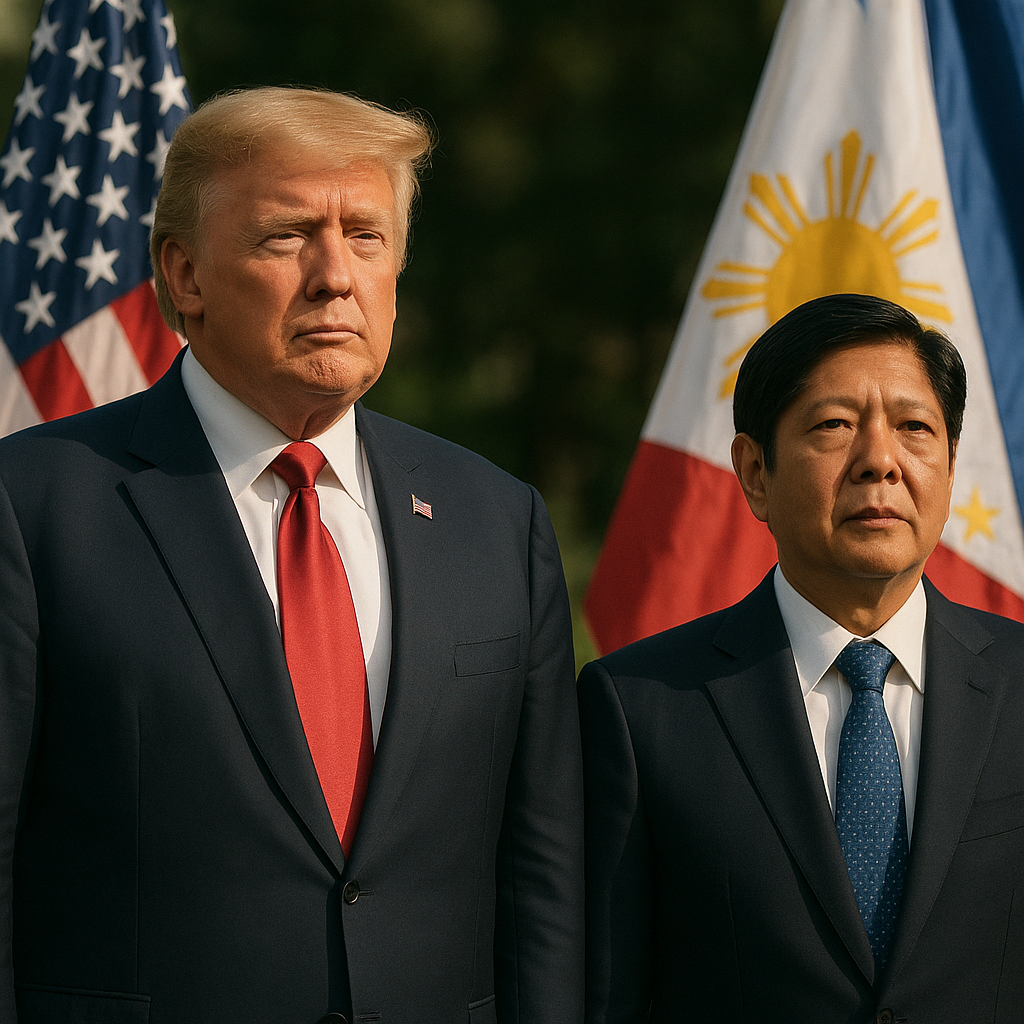
Former United States President Donald Trump has pledged to bring the Philippines' territorial concerns regarding the South China Sea to the forefront during impending diplomatic conversations with Chinese President Xi Jinping. This assurance follows a discussion with Philippine President Ferdinand "Bongbong" Marcos Jr., emphasizing the importance of the territorial dispute in the context of regional security and international diplomatic relations.
The commitment from Trump comes at a critically sensitive time as tensions continue to simmer in the South China Sea, a region fraught with overlapping territorial claims and significant geopolitical stakes. The Philippines, along with several other Southeast Asian nations, has been vocal about its claims in the area, which is also sought after by China.
In his conversation with President Marcos, Trump addressed the strategic importance of maintaining open and secure maritime routes in the region. The former president asserted his intention to advocate for peaceful resolutions and dialogues, highlighting the relevance of the South China Sea not only to local economies but also to global trade dynamics.
President Marcos has reportedly welcomed Trump's promise to raise these issues, underscoring the necessity for international support in peacefully resolving disputes. The South China Sea remains a pivotal passageway for international maritime trade, which amplifies the global implications of the ongoing territorial discussions.
This latest development arrives as both the United States and the Philippines continue to navigate complex transpacific geopolitical dynamics. For Manila, maintaining strong diplomatic channels with both Washington and Beijing is of utmost importance to safeguard national interests.
Furthermore, Trump's involvement in the discussions could invigorate diplomatic proceedings and potentially influence broader regional policies. The outcome of these discussions remains uncertain, and their impact on the geopolitical machinations in the South China Sea will be closely monitored by international observers and stakeholders alike.