

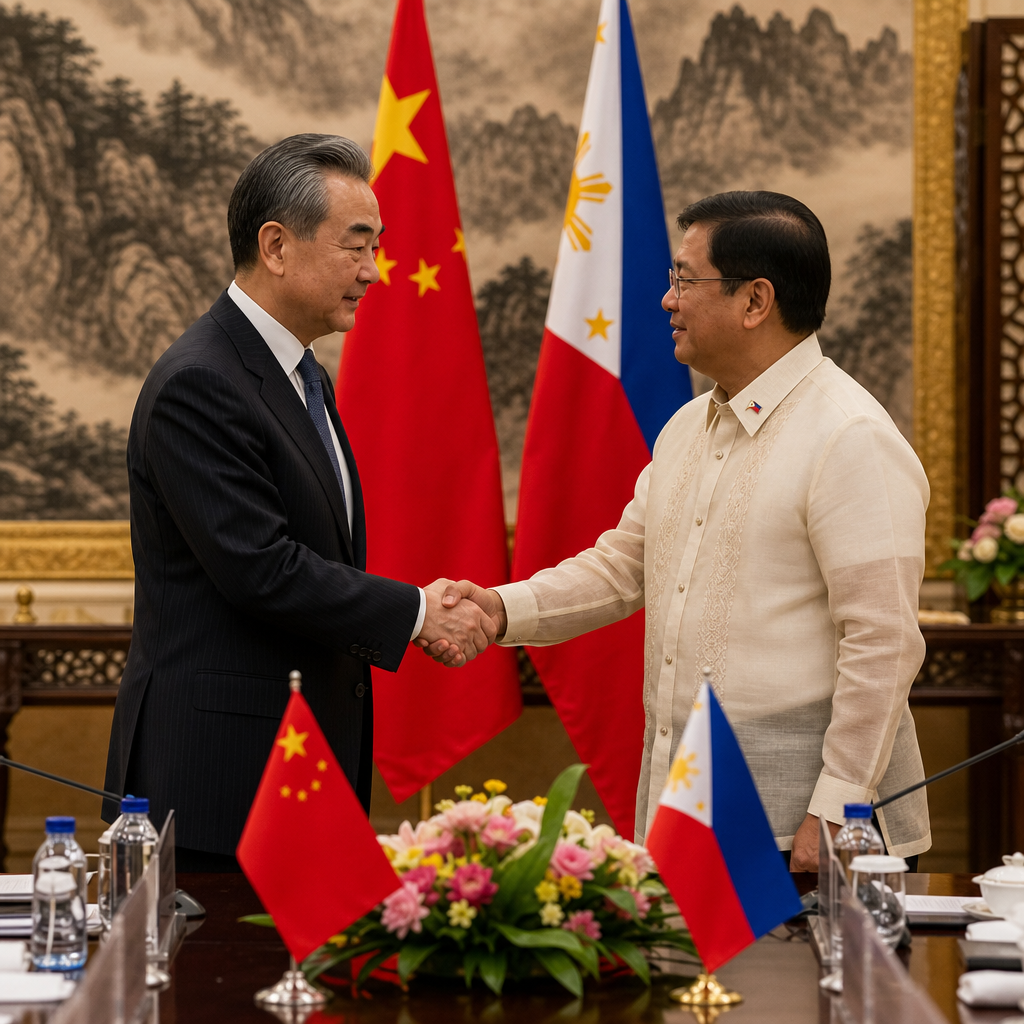
China and the Philippines are preparing to resume formal diplomatic discussions after a hiatus of four years. This significant reengagement is seen as a potential turning point in the diplomatic relations between the two nations, which have been marked by tension and sporadic stand-offs in the past decade.
The forthcoming meeting will bring together top-level envoys from both countries, representing a major shift in bilateral efforts to foster dialogue and address mutual concerns. The resumption of talks signals an openness from both sides to navigate their complex relationship, influenced heavily by the longstanding maritime disputes in the South China Sea.
Diplomatic efforts were largely stalled due to various geopolitical and regional developments, including external influences and competing territorial claims. The South China Sea remains a central issue, with China’s expansive claims overlapping with the Philippines' own interests, a challenge that has repeatedly tested diplomatic resiliency.
Backed by a shared interest in economic cooperation and regional stability, both sides are expected to discuss potential areas of collaboration that could pave the way for improved bilateral relations. Economic ties have historically anchored the relationship, with China serving as a crucial trade partner and investment source for the Philippines.
The international community will closely observe the outcome of these talks, given their potential impact on Southeast Asia’s geopolitical landscape. Strategic realignments and the influence of global superpowers in the region also loom over the discussions, adding to the high stakes involved.
Observers note that the diplomatic effort marks a renewed commitment to peace and stability, reflecting a broader trend of recalibration in the region. At stake is not only the bilateral relationship but also the future of multilateral partnerships in addressing shared regional challenges.