

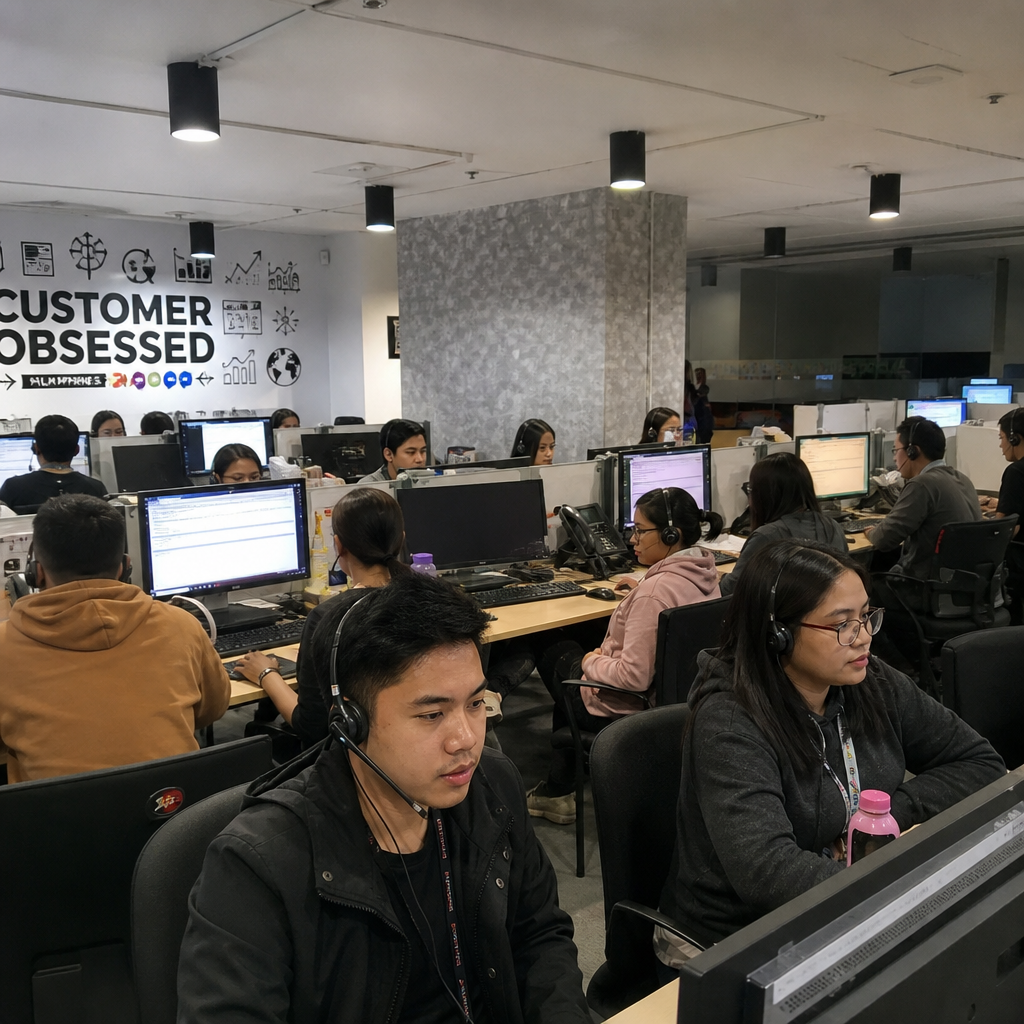
Artificial Intelligence now poses a significant threat to the Philippines' BPO industry. The sector has been a substantial part of the country's economy for years. Many worry about AI's impact on job security within the industry. Business leaders are now taking notice. They seek strategies to protect financial stability and maintain growth.
The BPO industry in the Philippines employs around 1.5 million people. Thousands of jobs are under threat from AI advancements. Call centers and back-office operations feel the pressure most. Employees fear widespread automation could replace many roles. AI technology can now perform several tasks typically handled by human workers.
Some managers suggest training programs for staff. These programs aim to equip workers with skills AI cannot replicate. New skills could help employees transition to AI management roles. Companies emphasize adaptability in the workforce. They believe this can secure jobs in the future.
Industry experts urge companies to diversify services. They recommend focusing on sectors where human interaction is vital. Legal services and healthcare support require personal touch and empathy. These sectors present opportunities for job growth that AI cannot duplicate.
The government plans to intervene if the situation worsens. Officials consider policies that encourage tech innovation while safeguarding jobs. Public-private partnerships may offer a solution. These partnerships can foster a balance between technology advancement and employment preservation.
Several companies already experiment with hybrid models. These businesses combine human expertise with AI efficiency. They report increased productivity without major job losses. Such models could become a new industry standard in the Philippines.
As AI tools advance, the pressure rises for business process outsourcing firms. They must innovate to keep thrive in the global market. CEOs and industry stakeholders urge vigilance as technology evolves. Sustaining the BPO sector means embracing new solutions and reshaping strategies.